A Brazilian innovation that concentrates green coconut water and lets you recreate real coconut water anywhere in the world. Brand, industry, technology and operations, from the palm tree to the shipping container.
The name IDCOCO sums up who we are. ID stands for identity: after all, we are the identity of the coconut. COCO stands for our tropical roots and the raw material at the center of everything we do.
IDCOCO was born in Bahia with a purpose: to change the way green coconut water reaches people, keeping what makes it special and making it possible to take it anywhere in the world, without the weight, the bulk and the short shelf life of fresh coconut.
Behind every sachet are more than 20 years of research, backed by the experience of a Bahia company that has been processing coconut since 1993.
Origin
Made in Bahia
Research
More than 20 years
Destination
Brazil and the world
Mission
To change the way the world drinks coconut water, bringing together the essence of the coconut, technology and convenience to take the green coconut water experience to more people, anywhere.
Vision
To be a global reference in coconut water innovation, taking the identity and essence of Brazilian coconut to the world.
Values
True to the coconut
Preserve the essence of the coconut and value what it naturally offers.
Quality
Keep excellence at every step, from choosing the raw material to the final product.
Innovation
Use technology and research to change the way coconut water is produced, shipped and enjoyed.
Trust
Build transparent, lasting relationships with consumers, partners and distributors.
Sustainability
Find solutions that make the most of the coconut, cut waste and build a more responsible supply chain.
Convenience
Make coconut hydration simple and easy, for every moment and every lifestyle.
Growth with purpose
Take IDCOCO to new markets, connecting its Brazilian roots with consumers around the world.
The science
Two decades of research to get to the sachet
More than 20 years of research and development made it possible to concentrate green coconut water while preserving its physicochemical, sensory and nutritional characteristics.
A technology built to bring together the essence of the coconut, stability and convenience, taking the green coconut water experience far beyond where it comes from.
20+Years of research and development
1stCoconut water in a sachet in the world
12monthsShelf life unopened, at room temperature
Why is green coconut so perishable?
Once it leaves the fruit, coconut water is naturally sensitive to microbiological, enzymatic and oxidative changes, which can alter its characteristics and shorten its shelf life.
The IDCOCO technology uses a concentration process that removes most of the water, keeping the components of the coconut in a concentrated, more stable form. The result is a sachet with a shelf life of up to 12 months at room temperature, when kept sealed and stored as recommended.
What stays in the concentrate?
The essence of green coconut water in concentrated form, with the electrolytes and minerals found in the coconut, like potassium and magnesium.
No added sugars or sweeteners
Gluten free
Vegan
The same standard, sachet after sachet
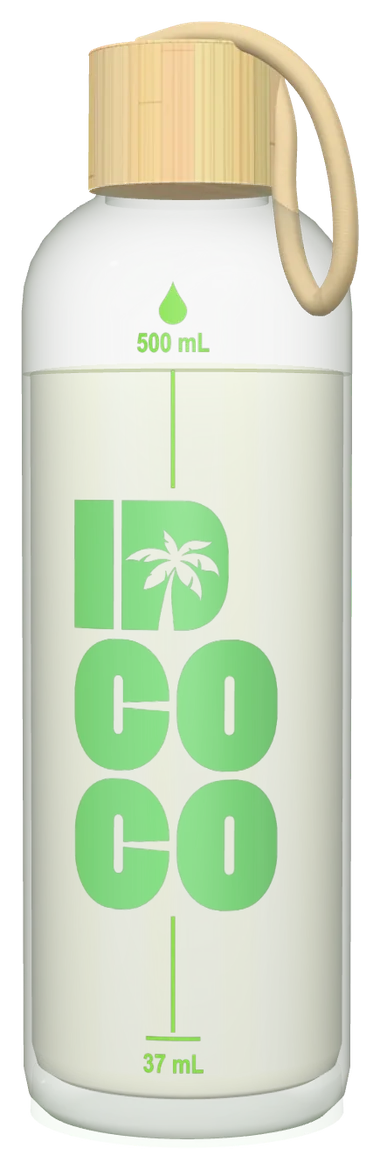
Each sachet is designed to be mixed with 500 ml of water, following a set concentration standard.
A range of 5.2 to 5.5 °Brix helps keep the product consistent, so the experience is the same from the first sachet to the last.
The factory
Where coconut becomes a sachet
IDCoco is made by Necttare, the partner company that developed the concentration technology. Since 1993 it has been processing coconut water and tropical juices in Feira de Santana, Bahia, for the food industry in Brazil and abroad.
1993Year Necttare was founded
350thousandSquare meters of land
15thousandSquare meters of buildings
2Labs, physicochemical and microbiological
Factory front, Feira de Santana
Receiving
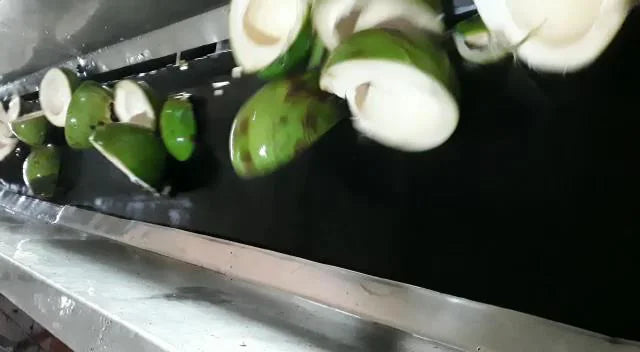
Green coconuts arrive from the harvest and are unloaded straight onto the line.
Cleaning
The coconuts are washed and dried before cutting.
Extraction
The water is drawn from the coconut. The husk goes on to become biomass.
Controlled evaporation
The technology removes the H₂O and keeps the nutrients and taste of green coconut.
Quality control
Every batch goes through the physicochemical and microbiological labs.
Filling
The concentrate is filled into 37 ml sachets that keep for 12 months unopened.
Drying the coconutsHusks coming out after cuttingProcessing lineControl room
Product quality and safety
Registered with the Brazilian Ministry of Agriculture (MAPA)
Health Surveillance license
Environmental license
Federal Police license
Kosher certificate
FDA
02
Green coconut
It all starts on the palm tree
Coconut palms bear fruit all year round. For IDCOCO, the coconut is picked while still green, at around 6 to 7 months, when the fruit holds a lot of water and has the qualities we want for the product.
Left on the tree, the fruit would keep ripening until it became a dry coconut, with more meat and less water.
The raw material is carefully selected for ripeness, quality and water volume, and goes to processing shortly after harvest.
From palm tree to sachet, it all starts with picking the right coconut.
From green coconut to sachet
From palm tree to sachet
A coconut's journey to your glass
Harvest
The coconut is picked green, at the age when it holds the most water.
Opening
At the factory, the water is drawn from the coconut. The husk goes another way.
Controlled evaporation
The technology removes the H₂O from coconut water and keeps the nutrients and properties of green coconut.
Sachet
The concentrate is filled into 37 ml sachets that keep for 12 months unopened, with no refrigeration, at room temperature.
Husk
It becomes energy briquettes that replace charcoal and firewood. The fiber and dust go to farming.
At your place
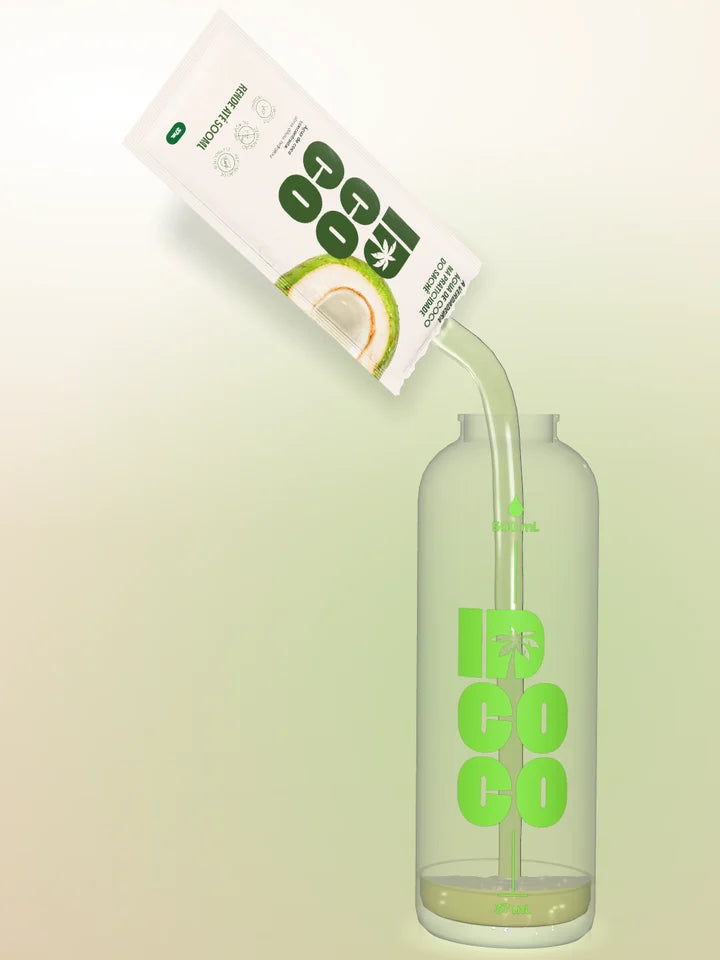
Add IDCoco to a glass or bottle first, then top up with up to 500 ml of mineral water and shake. The sachet turns into real coconut water.
From nature
How coconut water forms
Coconut water is the nutrient reserve the palm tree prepares for a new plant. It travels a long and entirely natural path before it ends up sealed inside the fruit.
Absorbed by the roots
The palm tree draws water and minerals from the soil.
Natural transport
Nutrients travel up through the xylem and phloem to the bunches.
Osmosis
Inside the fruit, water moves through the cells and carries the minerals with it.
Liquid endosperm
Coconut water forms, the reserve that would feed the sprout.
Ripening
The green coconut reaches its peak, with the most water.
Natural filtering
Fiber and husk filter and protect the water until the coconut is opened.
100litersof water from the soil, on average, for the palm tree to produce 250 to 350 ml of coconut water.
What nature puts in
One of the most complete drinks in nature
Green coconut brings together hydration, flavor and essential nutrients. It's one of the fruits most valued by people looking after their health every day.
Efficient hydration
Replenishes electrolytes
Isotonic by nature
Mild diuretic effect
Helps digestion
Low in calories
Heart health
Supports muscle function
Supports immunity
Fun facts
Green coconut has more history than you'd think
From its name to its journey across the sea, a few things most people don't know about the fruit that becomes IDCoco.
6 to 7 monthsis the age when green coconut is picked, when it holds the most water
01It has a faceWhy "coco"?
The name comes from a Portuguese word for a grinning face: the three little holes in the shell look like a face.
02It travels by seaHow did it get so far?
The fiber works like a float and shields the seed from salt water. Floating is how the coconut palm spread across tropical beaches.
03It's not a nutSo what is it?
To botanists, the coconut is a drupe, the same kind of fruit as a peach or an olive.
04Green and dry are the same fruitWhat's the difference?
Age. As the months go by on the tree, some of the water turns into meat: green has more water, dry has more flesh.
05It grows all yearIs there a season?
No. The palm tree produces all year, with new bunches coming in month after month.
06100 litersHow much water does it take?
On average, the palm tree draws 100 liters of water from the soil to produce 250 to 350 ml of coconut water.
IDCoco is green coconut water concentrated in a 37 ml sachet that makes up to 500 ml of coconut water. Small in your pocket, big on hydration.
37 mlper sachet
up to 500 mlof coconut water
12 monthsno fridge needed
63 kcalper prepared serving
Replenishes electrolytes
Isotonic
Vegan
Gluten free
No added sugars or sweeteners
How to make it
01
Open the sachet
Tear at the notch on top.
02
IDCoco first
Pour it into the glass or bottle, before any water.
03
Up to 500 ml of water
Top up with mineral water, ideally ice cold. Less water makes it sweeter.
04
Shake and drink
Ten seconds and it's ready. Once mixed, drink it right away.
Nutrition
Light by nature
Per 37 ml sachet, which makes up to 500 ml of coconut water: 63 kcal, 45 mg of sodium and no added sugar.
Servings per container: 1. Serving size: 37 ml (1 sachet).
Servings per container: 1. Serving size: 37 ml (1 sachet).
Nutrition Facts
37 ml
%DV*
Calories (kcal)
63
3
Total Carbohydrate (g)
16
5
Total Sugars (g)
14
-
Added Sugars (g)
0,00
0
Protein (g)
0,10
0
Total Fat (g)
0,00
0
Saturated Fat (g)
0,00
0
Trans Fat (g)
0,00
0,0
Dietary Fiber (g)
0,00
0,0
Sodium (mg)
45
2
Magnesium (mg)
17
1
Potassium (mg)
668
32
Calcium (mg)
72
3
*Percent Daily Values provided by the serving.
04
Who it's for
Coconut water for every moment
For kids, adults, seniors, families, athletes, travelers and anyone with a packed routine.
IDCOCO was made for people who want coconut hydration without the hassle, so it's easy to keep coconut water close at any time of day.
At work, at the gym, at the beach, at home or on the road: IDCOCO keeps up with your routine.
Hydration that comes from the coconut.
At home
The case lives in the cupboard, not in the fridge. One sachet per person, when it's time to drink.
At work
A sachet in your drawer takes care of the afternoon. IDCoco in the bottle, filtered water on top.
At the gym and on the field
Electrolyte replenishment that fits in your shorts pocket.
At the beach and on days out
No cooler, and no husks to haul home at the end of the day.
On the road
Light, compact and no fridge needed. Fits in your carry-on and your backpack.
With the family
From the kids' snack to the weekend outing, everyone makes it their own way.
05
Market
One product, many channels
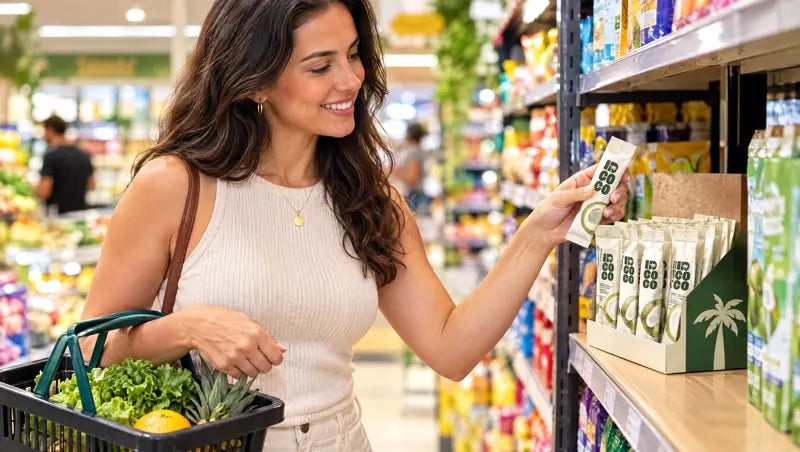
Because it needs no refrigeration and takes up little space, the same sachet works from retail to the most specialized operations. Every channel gets consistent flavor, simple restocking and less waste.
Retail
E-commerce
Supermarkets
Convenience stores
Bakeries
Distributors and wholesalers
Food service
Restaurants
Snack bars
Kiosks
Corporate dining
Health
Pharmacies
Hospitals
Sports
Gyms
Sports clubs
Sporting events
Hospitality
Hotels and resorts
Cruise ships
Airlines
Events
Private events
Sporting events
Special operations
Offshore
Schools
Pet market
Pet shops
Veterinary clinics
Pet industry distributors
06
Sustainability
Less weight. Less waste.
Sustainability at IDCOCO starts at the source and runs through the whole chain.
After the water is extracted, different parts of the coconut can find new uses. And by concentrating coconut water, we significantly cut the weight and volume we ship, making logistics more efficient and creating room to reduce the impact of transportation.
Less weight to ship
One sachet with 37 ml of concentrated coconut water, mixed with water, makes the equivalent of 500 ml of coconut water.
Instead of shipping most of the water that's in a ready-to-drink product, IDCOCO ships the concentrate: less weight and less volume all along the supply chain.
Compact packaging
The sachet takes up little space and uses compact packaging to deliver the equivalent of 500 ml of prepared coconut water.
That means more efficient storage, shipping and distribution compared with bulkier conventional formats.
More efficient logistics
Lighter, more compact products mean more units in less space, better loads and less weight moved along the chain.
That efficiency creates room to cut fuel use and transportation emissions per unit of product.
Nothing from the fruit goes to waste
WaterBecomes IDCoco
Concentrated into 37 ml sachets that make up to 500 ml.
HuskBecomes briquettes
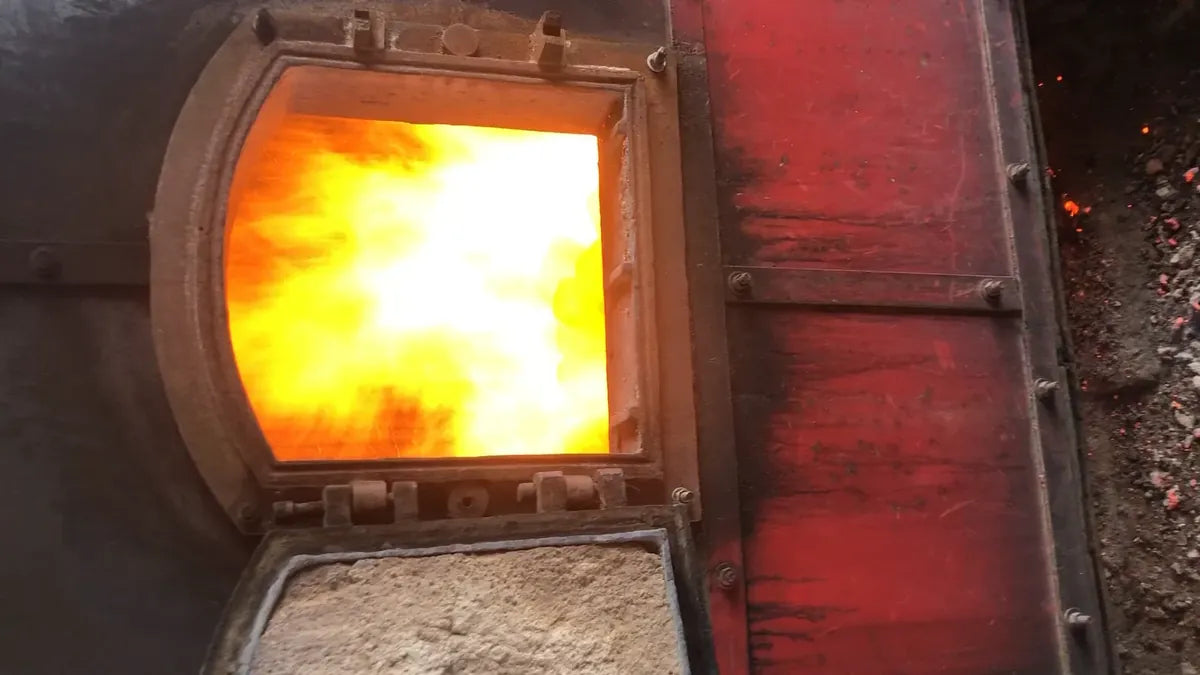
Eco-friendly fuel that powers the factory's own boilers.
Fiber and dustBecome growing media
Coconut chips, dust, fiber and peat for farming and landscaping.
Responsible growing
Sustainability starts before the harvest. We value responsible coconut farming practices, care for the soil, natural resources and the communities that are part of the supply chain.
From the source to the final product, our commitment is to build a chain that keeps getting more efficient, more responsible and more in tune with nature's cycles.
Circular economy
We get a lot more out of the coconut. After the water is extracted, what's left finds new uses.
Fibers and husks can be turned into biomass and briquettes used as an energy source, while other byproducts can become growing media and farming inputs. Through Briquettare, a company in the same group, part of this biomass is turned into briquettes, in an operation that can produce up to 3,000 tons a month.
What used to be waste becomes energy and new materials.
Social impact
Making the most of the coconut can also create new economic opportunities. Fibers and other parts of the fruit can be used to make pots, erosion control mats, growing media, handicrafts and other products, getting more out of the raw material and sparking new local industries.
For us, sustainability also means creating value for people and for the regions where coconuts are grown.
Committed to cutting carbon
Lighter logistics, putting biomass to use and responsible practices along the chain are all part of IDCOCO's drive for an operation that keeps getting more efficient and lower in environmental impact.
Our commitment is to keep improving, measuring our impact and looking for solutions that help cut emissions along the chain.
Briquettare · circular economy
From coconut to energy
After the water is extracted, what's left of the coconut gets a new purpose. It goes to Briquettare, a company in the same group, where the fiber is turned into biomass briquettes.
These briquettes go back into production as fuel for the factory's steam boilers, reducing the need for conventional fuels and giving a new purpose to what used to be thrown away.
With capacity to produce up to 3,000 tons of briquettes a month and a fiber reserve for 2 to 3 years, the operation ties production and reuse together in a circular economy model.
The coconut hydrates. The fiber makes energy. And the cycle goes on.
Coconut fiber briquettesEnergy for the boilersBriquettare plant
Green coconutpicked at the right age
Waterbecomes IDCoco
Fiber and huskbecome briquettes
Briquettesmake steam at the factory
Coconut briquettes or firewood
The same job in the boiler, with more energy per kilo and less mess.
The old way
Firewood
Heating value
1,500 to 2,500 kcal/kg
Moisture
35% to 65%
Ash, soot and smoke
A lot
Burn
Uneven
Storage
Takes up a lot of space
Transport permit
Requires an Ibama permit, with fees
Sold
By the cubic meter, imprecise
or
From coconut fiber
Coconut briquettes
Heating value
4,800 to 5,200 kcal/kg
Moisture
14% to 20%
Ash, soot and smoke
Little
Burn
Even, with a steady flame
Storage
Takes up little space, clean and dry
Transport permit
Not required
Sold
By weight, exact
Biomass products
The fiber also becomes growing media
Whatever doesn't become energy becomes material for farming, landscaping and seedling nurseries, improving the physical and chemical properties of the soil.
Coconut chips, coarse
Larger pieces, for mulching and drainage.
Coconut chips, fine
Smaller pieces, for growing mixes.
Coconut dust
Holds moisture and makes soil lighter.
Coconut fiber
Used in farming, in mats and as stuffing.
Coconut peat
Ready-to-use growing medium for soil.
Pressed peat blocks
Compact for shipping and storage.
07
Packaging
From sachet to shipping container
Seven levels of packaging, designed to fit more sachets into less space. From the 37 ml sachet to a container with 360 thousand units.
Level 01
Sachet
137 ml sachet
Level 02
Display box
15sachets
Level 03
Case
60sachets · 4 display boxes
Level 04
Small pallet
12,000sachets · 200 cases
Level 05
Large pallet
18,000sachets · 300 cases
Level 06
20’ High Cube container
180,000sachets · 3,000 cases · 10 pallets
Level 07
40’ High Cube container
360,000sachets · 6,000 cases · 20 pallets
08
Logistics
Less volume to ship. More efficient distribution.
By concentrating coconut water, IDCOCO significantly cuts the weight and volume it ships.
Compact, light and with a shelf life of up to 12 months at room temperature, the sachet needs no cold chain when stored as recommended, which simplifies storage, shipping and distribution in Brazil and abroad.
Storage
Up to 12 months at room temperature, in a dry place and under the recommended storage conditions.
No cold storage needed, which makes inventory easier to manage and removes the logistics headaches that come with the short shelf life of fresh coconut.
Nationwide distribution
Distribution centers in Feira de Santana (BA) and São Paulo (SP), so we can serve different regions of the country.
Export
The compact format was also designed to make international operations more efficient, moving large volumes of product in a small space.
Export pallet: 18,000 sachets. 40 foot container: up to 360,000 sachets.
Road, air and sea
Light, compact and with no need for a cold chain, the sachet works with all the main shipping modes:
Road · Air · Sea
More flexibility to take IDCOCO from Brazil to the world.
110trucksof green coconuts, between 100 and 110, stay off the roads for every 24 tons of sachets. Between Ceará and São Paulo, a single one of those trucks emits about 3.5 tons of CO₂.
09
Around the world
From Brazil to the world
A new way to take Brazilian coconut water further.
IDCoco is a Brazilian innovation taking coconut water to new markets, bringing convenience, technology and the taste of real coconut water around the world.
Americas · Europe · Asia · Middle East · Oceania
Export without a cold chain
The sealed sachet needs no refrigeration and takes up a fraction of the volume of the finished drink. That opens up markets far from the palm trees, at a lower logistics cost.
Distributors and partners
IDCoco is looking for international distributors and partners in retail, food service, hospitality and special operations in every region.
Tailored to each market
Labels, languages, currencies and export paperwork adapted to each destination, within the quality standards the global market demands.
Key markets
Germany
Argentina
Saudi Arabia
Australia
Bolivia
Belgium
Canada
Qatar
Chile
China
Colombia
South Korea
United Arab Emirates
Spain
United States
France
Greece
Indonesia
Ireland
Italy
Japan
Mexico
Peru
Portugal
United Kingdom
Singapore
Sweden
Switzerland
Thailand
Turkey
Uruguay
Vietnam
India
Brazilian coconut water. Innovation without borders.














 Waterbecomes IDCoco
 Briquettesmake steam at the factory
 Water
 Briquettes


 Germany
 Argentina
 Saudi Arabia
 Australia
 Bolivia
 Belgium
 Canada
 Qatar
 Chile
 China
 Colombia
 South Korea
 United Arab Emirates
 Spain
 United States
 France
 Greece
 Indonesia
 Ireland
 Italy
 Japan
 Mexico
 Peru
 Portugal
 United Kingdom
 Singapore
 Sweden
 Switzerland
 Thailand
 Turkey
 Uruguay
 Vietnam
 India